
THE RIGHT FIT STARTS HERE
Bed height calculator.
Calculate total bed height from your frame, mattress and extra layers—or find the support height for your target. Switch between inches and centimeters.
Your measurements
Example setupMeasure to the top of the slats or platform—not the side rail.
From the floor to the top edge of the side rail.
From the side-rail top down to the slats.
From the floor to the top of your mattress and topper.
Use the full thickness, including the part inside the frame.
Only add layers or net lift not already included in your support-height measurement. Already installed risers count as part of that measurement.
FINISHED BED HEIGHT
60.96 cm · Floor to sleeping surface
14 + 10 = 24 in
Give it a sit test. Feet flat on the floor, with a comfortable sit and stand. A soft mattress will sink when you sit on it.
A FEW INCHES MAKE A DIFFERENCE
Measure the right height.
Your bed frame has more than one height. Start with the surface that supports your mattress.
Find the support surface
Measure vertically from the floor to the top of the slats or platform. If your mattress sits inside the frame, the side-rail top is higher than this surface.
Add each layer once
Use the mattress’s full thickness, then add a separate box spring or topper if you have one. Include only additional lift that is not already in your measurement.
Check the finished bed
Measure to the top of the mattress or topper without anyone sitting on it. Pillows, duvets and the headboard do not count.
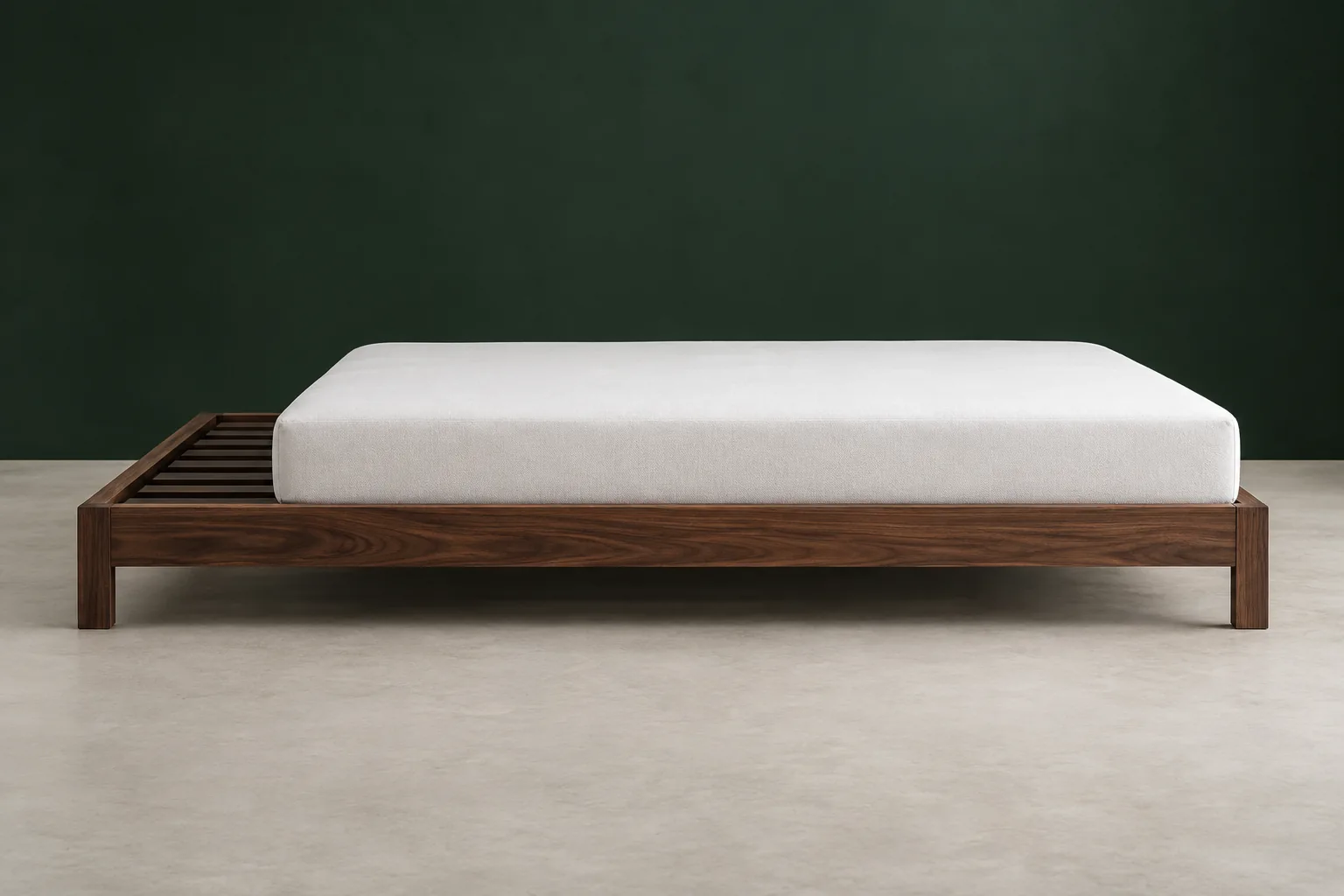
Slats. Side rail. Sleeping surface. The exposed slats support the mattress. Measure to their top surface, then add the full mattress thickness.
THE NUMBERS, EXPLAINED
Every layer adds up.
The calculator starts at the floor and adds the layers above it. It estimates the unloaded height, before a person sits on the mattress.
Total bed height
Support + foundation + mattress + topper + additional lift
Support height needed
Target − foundation − mattress − topper − additional lift
If you measure from the side-rail top, subtract the recess depth once to find the support height. If you already measured to the slats, do not subtract it again.
Three ways to build the height.
Example measurements, not recommended configurations.
| Setup | The calculation | Finished height |
|---|---|---|
| Platform + mattress | 14″ support + 10″ mattress | 24″60.96 cm |
| Frame + box spring | 7″ support + 9″ box spring + 12″ mattress | 28″71.12 cm |
| Recessed mattress | (14″ side rail − 2″ recess) + 12″ mattress | 24″60.96 cm |
BEFORE YOU CHOOSE A FRAME
A little more clarity.
Does bed height include the mattress?
Yes. Finished bed height is the distance from the floor to the top of your mattress and any topper. A bed frame listing may instead show the side-rail height, headboard height or under-bed clearance. Check the dimension diagram for the height of the actual support surface before using a listed number in this calculator.
How tall should my bed be?
Start with a height that lets you sit on the edge with your feet flat on the floor and sit down and stand up comfortably. There is no single calculated height that fits everyone. Mattress edge compression also affects how it feels. If you already have a comfortable bed, measure its finished height and use that as your target.
What frame height do I need for a 12-inch mattress?
It depends on the finished height you want. For a 24-inch target with a 12-inch mattress and no other layers, you need a support surface 12 inches above the floor. Add a 2-inch topper and the required support height becomes 10 inches. Compare that result with the slat or platform height, rather than the headboard or side rail.
Is bed height the same as under-bed clearance?
No. Under-bed clearance is the open space below the frame. Measure along the path your storage bin or vacuum will actually take, including any lower rails or cross supports. A tall mattress raises the sleeping surface without creating more storage space. This calculator adds the height of your bed; it does not infer the clearance underneath.