How to Stop a Bed From Sliding on the Floor
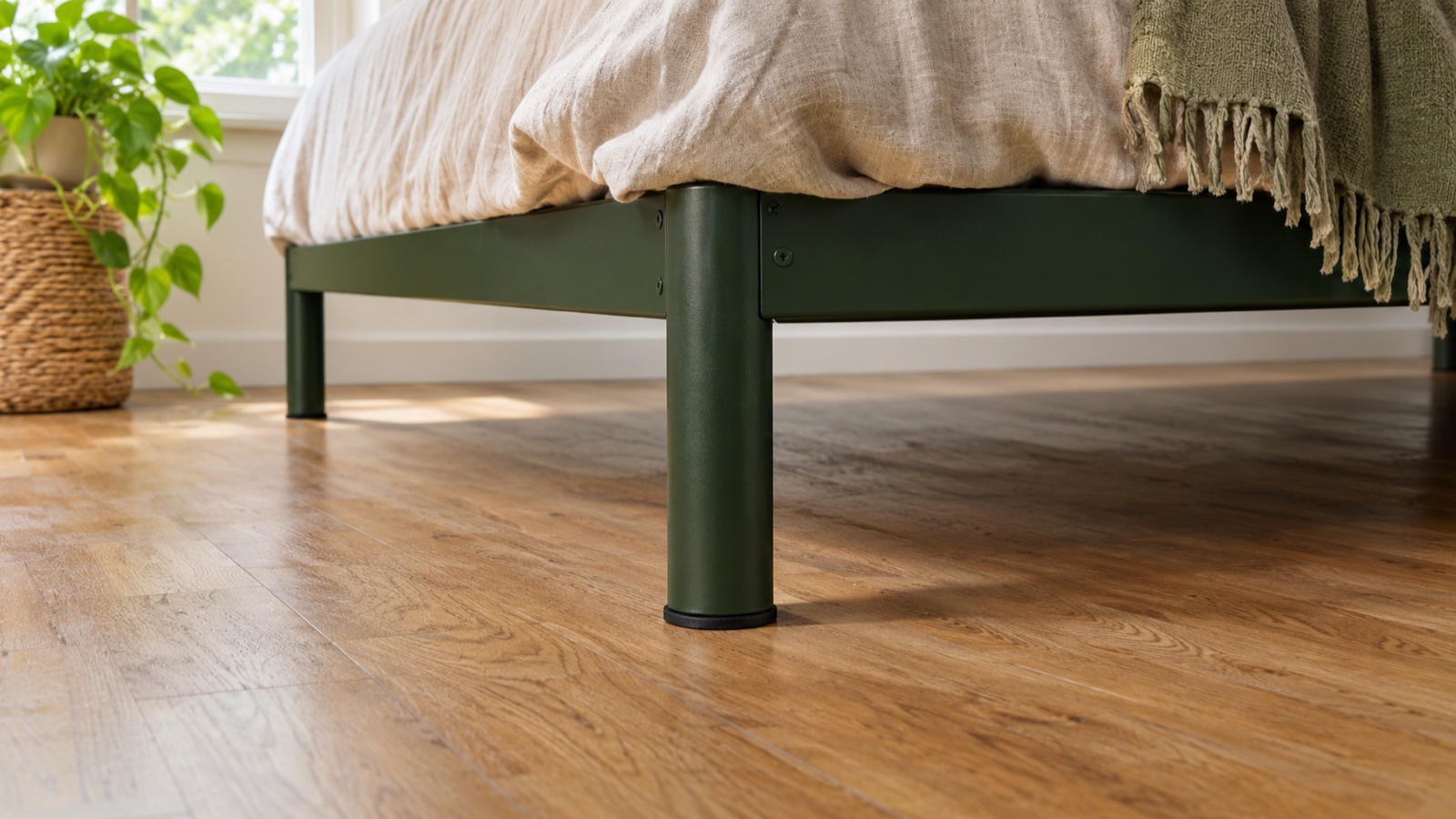
A bed frame can creep across a smooth floor a little each time you sit on the edge. The fix depends on what touches the floor. A flat gripper can help a fixed foot stay put, while a caster cup holds a wheel in a recess. Before buying either, check that the frame sits as its maker intended and confirm that the accessory suits your floor finish.
Here’s how to figure out what’s moving, measure the feet or wheels you have, and check that the bed still sits properly after adding grip.
First, Check What’s Moving
Pull the bedding back far enough to see the frame and a foot. Put a small paper marker beside the foot so you can check its position later. If the bed feels solid, have someone watch the foot and mattress edge while you sit down as usual. Repeat at the end that tends to drift.
| What you see | Where to start |
|---|---|
| Feet move away from the marker | The whole frame is sliding. Check the feet and floor before choosing a gripper. |
| Wheels turn or swivel | Engage the built-in locks if present, then check whether a locked wheel still skids. |
| A corner lifts or a joint rocks | Check hardware, feet, and support adjustment against the assembly guide before fitting pads. |
| Mattress shifts while feet stay put | Check mattress fit and the frame’s retainers. The movement is above the frame. |
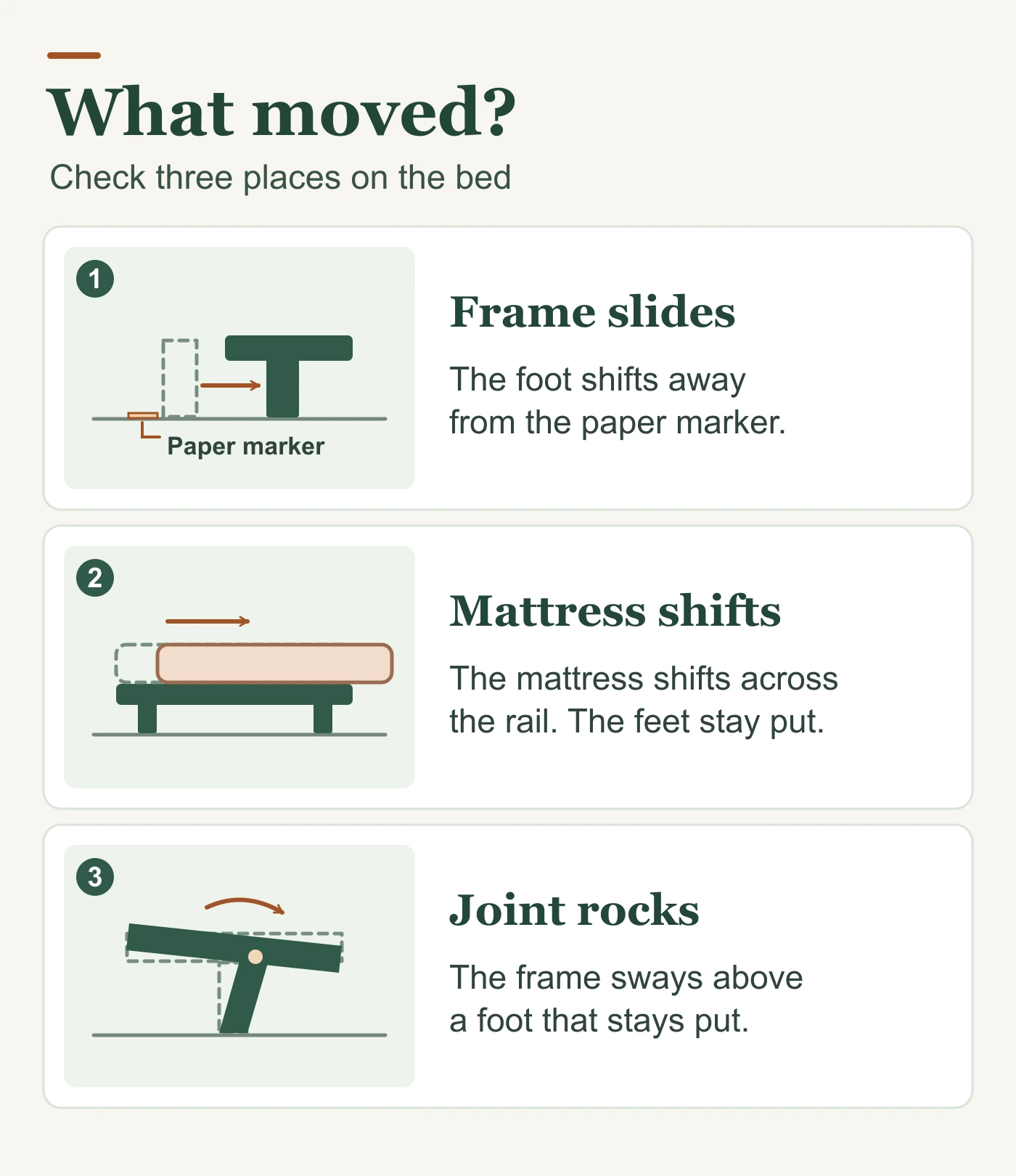
If the noise makes it hard to tell what’s moving, watch the feet before changing anything. A headboard tapping the wall can accompany floor movement or a loose connection. Our guide to bed frame parts shows where to find the center beam, support legs, and rail connections.
Measure the Parts That Touch the Floor
Check under the entire bed. The center beam may have one or more supports with smaller feet than the outer legs. Use the assembly guide to confirm which supports should contact the floor and how the maker says to set them. Note the contact points and measure each distinct foot or wheel.
- Flat feet. Measure the width and length of the bottom face, or the diameter of a round foot. Include any cap that actually rests on the floor. The full bottom face should sit within the pad.
- Casters. Measure the wheel diameter and the full width that must fit inside the cup. For paired wheels, check their combined width. Compare those dimensions with the maker’s wheel fit and check that the wheel can settle into the recess without its housing catching on the rim.
- Wide blocks or rails. Look for a flat contact area the pad can support. A narrow patch underneath a broad foot can concentrate the contact on one small area. A long, continuous base needs a solution that suits its shape.
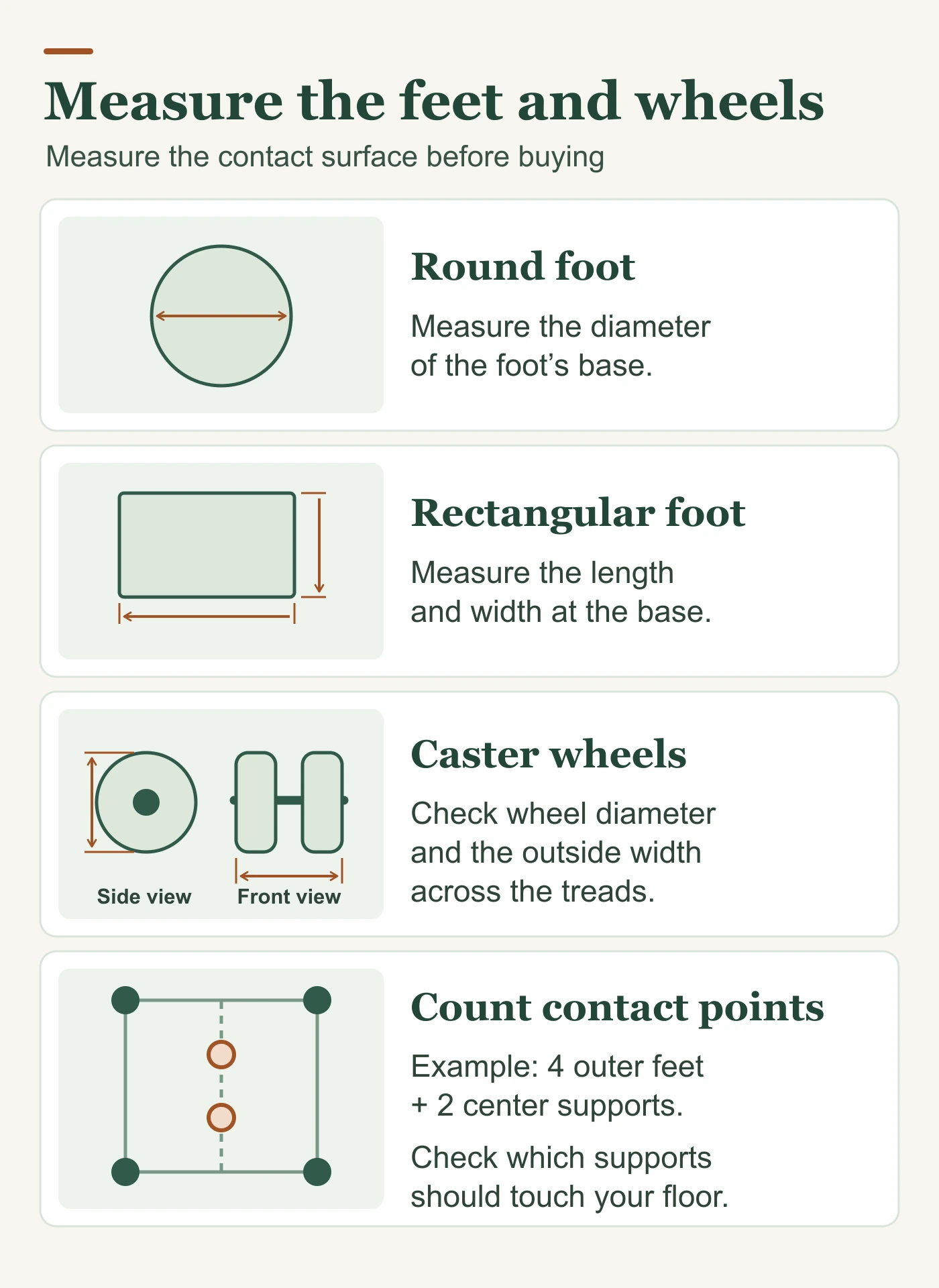
Count by type as well as by total. A bed with four outer feet and two center feet that are designed to rest on the floor has six contact points. If all six take the same pad, an eight-pack covers them. If the four corners have wheels, plan the four cups and the two center supports separately. Measure how the accessories change the height at each point before combining them.
Match the Grip to Your Floor
Check the care instructions for the specific flooring and finish. A pad can fit the foot and still use a material the flooring maker advises against. Clean grit off the floor and feet before placing anything beneath them.
How to Stop a Bed From Sliding on Hardwood
For fixed feet, start with removable grippers that match the foot and are approved for your finish. For wheels, start with the locks and use a compatible cup if the wheel still shifts. Center each foot or wheel on its accessory and keep grit from getting trapped underneath.
- Laminate. Choose a pad or cup with a broad base and check the laminate maker’s guidance on rubber and adhesives.
- Ceramic or porcelain tile. Seat the entire base on a flat surface. Check for raised tile edges or grout lines that keep it from sitting evenly.
- Carpet or an area rug. Watch whether the feet shift on top of the covering or the rug itself moves. Those are two separate contact points.
For vinyl, check the exact surface even when a gripper is sold for hard floors. Shaw, for example, calls for non-staining furniture protectors and advises against rubber- or latex-backed mats on its resilient flooring. If an area rug and the bed move together, a rug pad matched to the flooring may help. RugPadUSA makes an EVA-backed pad for vinyl and LVP. Check the floor maker’s care instructions for your finish before choosing it. See Shaw’s care guide and the Anchor Grip specifications.
Three Accessories for Different Bed Feet
Start with the shape of your foot or wheel, then use the manufacturer’s dimensions and your floor instructions to check fit. The pack counts below refer to the exact versions listed.
| Your setup | Accessory | Size and quantity | Fit to confirm |
|---|---|---|---|
| Compact fixed feet | Slipstick GorillaPads | Approx. 2 in. square or round, 8 per pack | Foot fits fully within the pad. |
| Wide or rectangular fixed feet | Slipstick cut-to-fit GorillaPads | 4 × 4 in. before cutting, 8 per pack | Choose a scored shape that covers the whole contact face. |
| Caster wheels | Slipstick large caster cups | 4 cups, 3¼ in. outside diameter | Wheel diameter, width, and housing fit in the recess. |
Swipe the table to compare sizes and fit.
Compact Fixed Feet: Slipstick GorillaPads
For a flat foot that fits within about two inches, match a square pad to a square foot or a round pad to a round foot. Both options have rubber contact surfaces around a felt core. Place them loose under compatible feet on a compatible floor. If any edge of the foot projects past the pad, choose a larger size.


View square pads on Amazon (paid link) View round pads on Amazon (paid link)
Wide Flat Feet: Slipstick Cut-to-Fit GorillaPads
The eight 4-by-4-inch pads are scored so you can cut along guides for smaller shapes. A flat, rectangular foot might need a 3-by-2-inch piece even if its shorter edge fits a standard square pad. Plan one continuous piece under each foot. If you use the optional adhesive, apply it to the furniture foot as directed by Slipstick.

Wheeled Bed Frames: Slipstick Large Caster Cups
This chocolate four-pack uses a recessed seat for the wheel and a gripping ring at the floor. A roughly two-inch wheel is a starting point. Measure its diameter and width and check both against the maker’s fit guide. The 3¼-inch figure measures the outside of the cup. The recess is smaller, so check that the wheel sits fully in it.

Install the Grips and Recheck the Bed
- Start with a sound frame. Check the joints, feet, and caster locks using the frame maker’s instructions. If a leg is bent or a connection won’t hold, deal with that before adding grip.
- Place and center each piece. Follow the frame’s lifting instructions and get help if needed. Lift enough to place the pad or cup, then lower the foot or wheel into its center. Keep casters locked if the frame has locks.
- Check the support points. Look for rocking or a change in the position of the center feet. Verify that each support sits as the frame instructions specify before you use the bed.
- Check the same feet again. With the frame steady, repeat your observation in normal use. If a pad has shifted or a wheel is climbing the rim, check fit and floor contact again.
Example with four wheels and two center feet. Cups can raise the corners by a different amount than pads raise the center feet. Check the installed heights and the center support position as directed by the frame maker. If a center support now hangs too high or lifts the side rails, remove the accessories and check whether the maker provides a compatible adjustment or setup. Stacking loose pads can leave a foot unstable.
Common Questions
Do felt pads stop a bed from sliding?
Plain felt can protect a finish and help furniture glide. For a frame that creeps, look at the surface facing the floor. A pad with a felt core and a grippy exterior works differently from a pad with exposed felt.
Will a headboard bumper keep the whole bed in place?
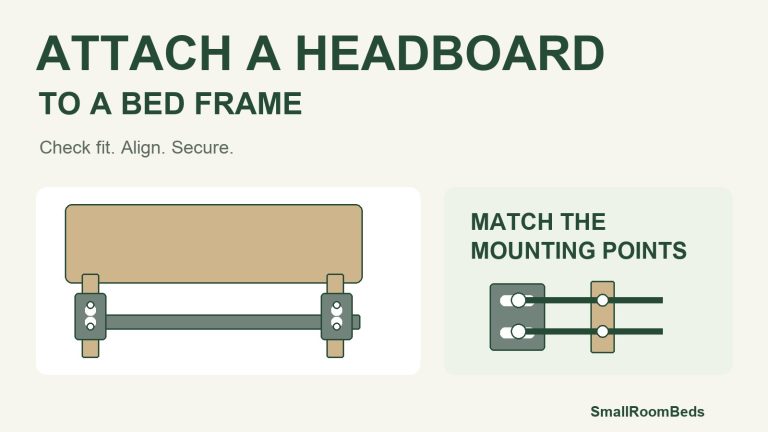
A bumper can cushion contact with the wall. If the feet move, address the contact with the floor first. If the feet stay still and the headboard moves on its own, inspect its mounting hardware. Our headboard attachment guide covers common mounting setups.
Can I use pads on only the corners?
Check how the center supports are designed to sit. Adding height at the corners can change that setup. Once the corner accessories are fitted, compare the center support position with the manufacturer’s instructions before using the bed.
Why does my bed still slide with the wheels locked?
The lock can stop the wheel from rolling while the whole caster still skids across a smooth floor. Watch the caster against your floor marker. If it slides as a unit, a correctly sized caster cup with a floor-compatible base may help.