How to Raise a Bed Frame for More Under-Bed Storage
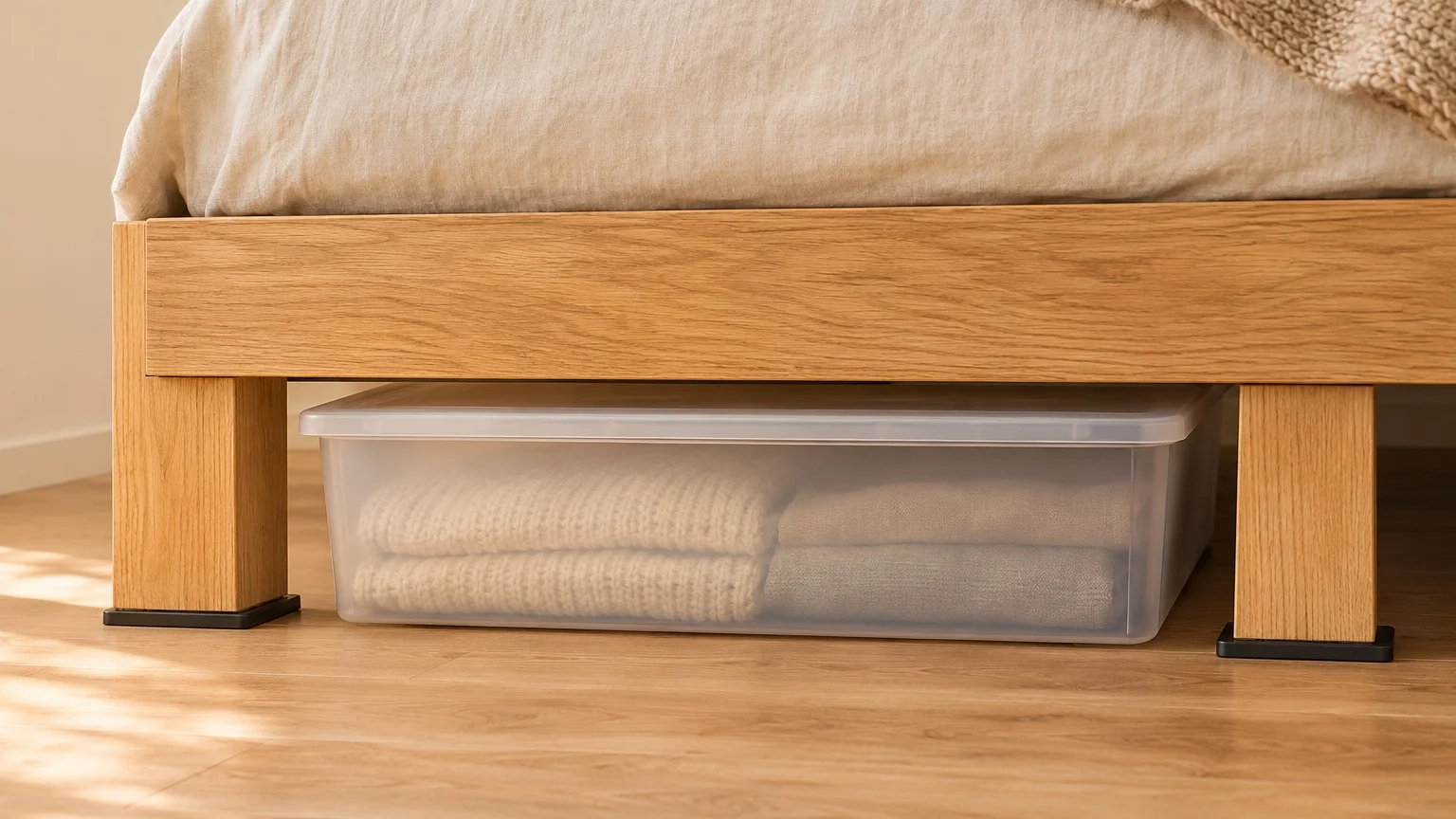
A storage bin can fit under the middle of a bed and still catch on the rail when you slide it in. Before buying bed risers, we measure the tightest point along the route the bin will actually take. That measurement tells us how much height to add and whether a different opening could solve the problem first.
Here’s how to raise a bed frame you already own. We’ll work out the minimum lift, check the corner and center feet, and make sure the bin still fits between the risers after installation.
Quick answer. Measure the lowest clearance along the bin’s path. Subtract it from the bin’s full height plus a little room to slide it in. Choose the smallest compatible lift that meets that number, and check every foot the frame uses for floor support.
In this guide
1. Measure the lowest clearance along the storage path
Pick the side or foot of the bed you can reach comfortably. Hold a tape measure vertically from the floor to the underside of the side rail, then check farther in where the bin will sit. A bracket, crossbar, or low bolt head can hang below the rail. Use the smallest floor-to-obstruction measurement on that path.
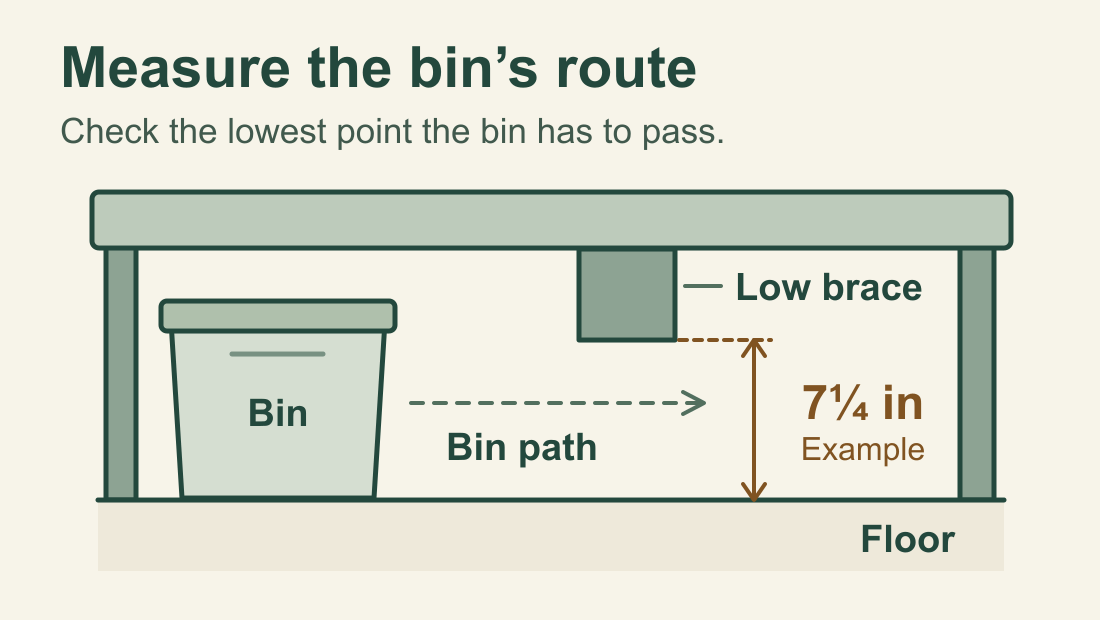
Measure the bin at its tallest point with the lid on. Include wheels, latches, and handles that stick up. Then check the width between feet and whether you can turn the bin into position. A center foot can block that turn even when there is ample height on both sides of it.
If the bin just catches on a bracket, try the other side or a different bay before adding height. With two bins, measure a route for each. The path that works for the first one may be too narrow for the second.
2. Calculate how much lift you need
Minimum net lift = bin height + handling room − lowest clearance. If the result is zero or less, you have enough height on that path. Check its width next.
Handling room is the space you want above the lid so the box can slide through without scraping. We’ll use half an inch in this example. A bin that has to tilt or cross a rug edge may need more.
| Measurement | Inches |
|---|---|
| Lowest clearance before lifting | 7¼″ |
| Bin with lid plus handling room | 9″ + ½″ = 9½″ |
| Minimum net lift | 2¼″ |
| Estimated opening with 3″ of net lift | 10¼″ |
| Estimated mattress top with the same setup | 23″ + 3″ = 26″ |
In this example, a 2″ riser leaves only ¼″ above the lid, short of the chosen ½″ allowance. A compatible 3″ riser meets the target. Look for net lift, the distance from the floor to the surface where the foot rests. A riser with a 4″ body and a 1″ recessed seat can add 3″. If the maker already lists the net lift, use that number directly.
Uniformly raising the frame also raises the mattress top by the same amount if you keep the same mattress and foundation. Use our bed height calculator to check the new sitting height before you choose a riser.
3. Match the riser to every bed foot
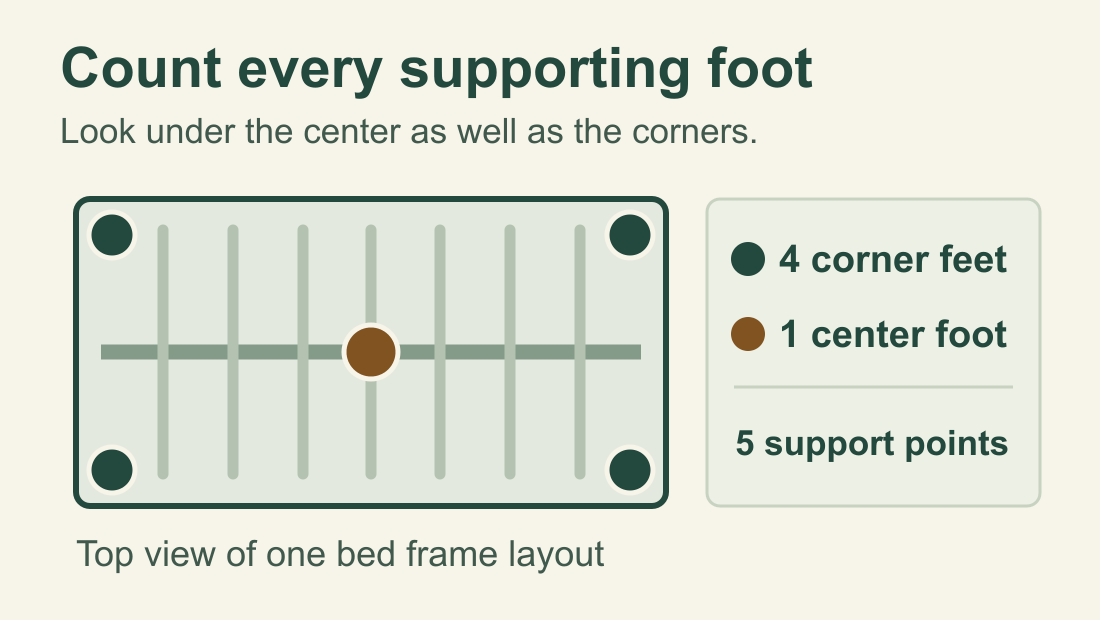
Look under the bed and count the feet the frame instructions call for. Some beds have four corner feet and one or more floor-contacting center supports. Others use a center beam that spans the frame without a foot. A center support can also be a different size or shape from the corners, so measure it separately.
| What touches the floor | What to check before you buy |
|---|---|
| Round or square feet | Measure the bottom diameter or both sides. Use the stated limit for that shape. A square foot’s corners can hit a round rim even if its sides are narrower than the opening. |
| Casters | Choose a riser specified for casters. Check the wheel diameter, tread width, and whether the caster housing clears the rim. |
| Center support foot | Check its footprint and where it sits. After lifting, it must make floor or riser contact as specified in the bed manual. |
| Angled feet or a floor-standing base | Check the frame maker’s lift options. A cup needs a foot that sits flat and fully inside it. A continuous base needs the support specified for that base. |
Check the usable seat and the base. The seat must hold the whole foot without resting it on the rim. The base has to sit flat on the floor, clear any wall or baseboard, and leave enough width for the bin to pass. Check the frame and riser load limits for your setup, including bedding and sleepers. A riser’s rating does not increase the frame’s own capacity.
For a frame with four corner feet and one required center foot, a four-pack leaves you one support short. Count one same-height riser position per required foot. For interlocking one-inch pieces, multiply the number of feet by the number of pieces per foot. Five feet at two pieces each need ten pieces.
4. Choose bed risers by their net lift
These are three options for different lift targets. Compare each with your actual floor-contact points, then choose the smallest suitable increase.
| Product | Net lift | In the box | Fit check |
|---|---|---|---|
| Slipstick Stack-Its CB657 | 1″ per piece, up to 3″ | 8 pieces | Use matching layers at each foot and check the recessed seat. |
| Slipstick CB674 | 2″ | 4 risers | Round feet up to 3″ or square feet up to 2.1″, per the linked listing. |
| Slipstick CB672 | 3″ | 4 risers | Same listed foot limits as CB674, with a deeper seat. |
Swipe the table to compare fit.
Slipstick Stack-Its CB657

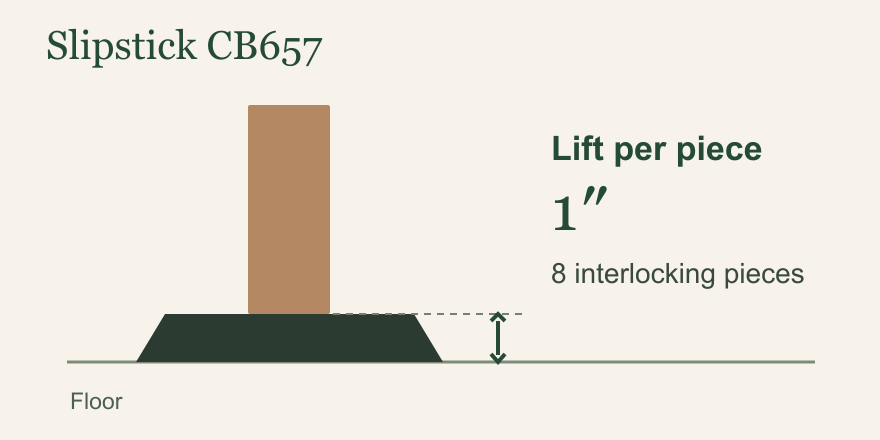
Pros. Adds height in one-inch steps, and one eight-piece box can cover up to eight feet at the one-inch setting. Cons. Using two or three layers cuts the number of support points one box can cover.
Who should skip this. Skip it if a foot cannot sit flat in the recess or the floor is thick, high-pile carpet. Count the pieces before buying if your bed needs more than one layer.
Slipstick CB674

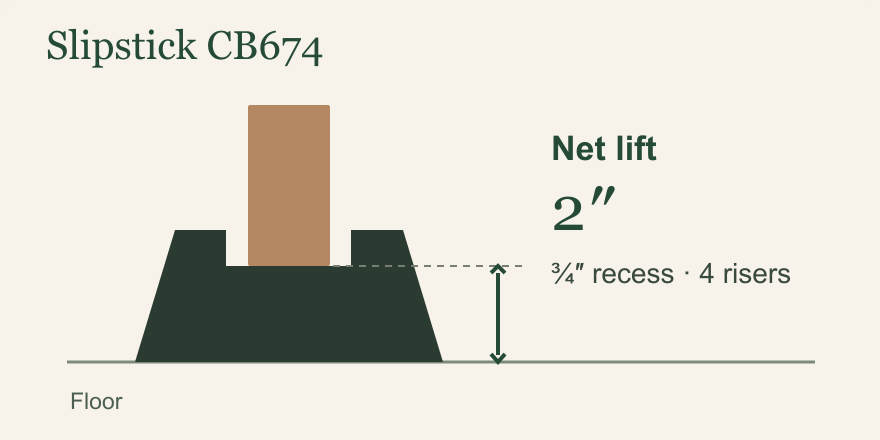
Pros. Adds 2″ without stacking and has a recessed holder for fitting feet or casters. Cons. The base is about 5⅛″ across, so it can take up part of a narrow opening.
Who should skip this. Skip it if you need more than 2″ or if any load-bearing foot exceeds the linked listing’s limits.
Slipstick CB672

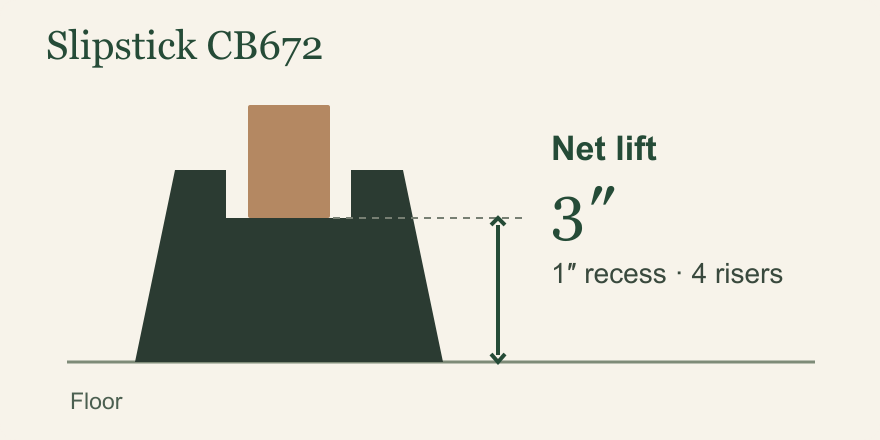
Pros. Adds 3″ in one piece, with a 1″ recessed holder on the linked U.S. version. Cons. One box covers four feet, and the taller setup also puts the mattress top 3″ higher.
Who should skip this. Skip it if a shorter lift meets your target, the new bed surface is too high for you, or a required foot cannot sit fully inside the cup.
5. Install the risers and recheck the opening
- Unload the bed as directed. Move the bins aside and follow the frame and riser instructions. Have someone help lift the frame so the feet can be lowered into place.
- Seat and level the feet. Each base should rest flat and each foot should sit fully on its seat. Check the central feet against the frame instructions. If a foot hangs clear or pushes the frame out of level, resolve that before using the bed.
- Put the mattress back and measure again. Check for rocking or a tilting base. Remeasure the lowest opening on the same path, then slide the bin in and out. Check the new mattress-top height too.
If the existing feet cannot sit properly on risers, look for a compatible leg kit. For example, the KD Frames Nomad has a model-specific 18″ option to replace its standard 15″ legs. The King and California King kits include matching center legs. If your frame has no suitable lift option, compare the measured openings in our guide to bed frames with room for storage underneath.
Common questions about raising a bed frame
Can I put risers under the four corners only?
Only if those are the frame’s only required floor supports. If the manual calls for one or more center feet, keep each of them supported in the raised setup.
How can I raise a bed frame without risers?
Use the frame’s built-in height setting or a manufacturer-approved set of longer legs, if available. For a powered adjustable base, use the leg configuration approved for that specific model.
Will a thicker box spring give me more storage room?
On the same frame, a taller compatible box spring raises the mattress top. The floor-to-rail opening stays where it was. For storage space, measure from the floor to the frame.